Then my son asked something that hurt more than any accusation could have.
“Did you ever stop looking?”
I answered carefully.
“I stopped believing I would find you. I never stopped wanting to.”
He nodded, but he didn’t say anything for a while.
A week later, my daughter and son came to the house.
I had imagined that moment for forty years, which meant the real version could never match the fantasy.
There was no running across the driveway.
No instant embrace that repaired everything.
They stood near the front door looking at a house they barely remembered.
My daughter touched the hallway wall.
My son stared toward the stairs.
Then my daughter asked if her room was still upstairs.
“Exactly where you left it,” I said.
She looked at me with an expression I couldn’t read.
We went up together.
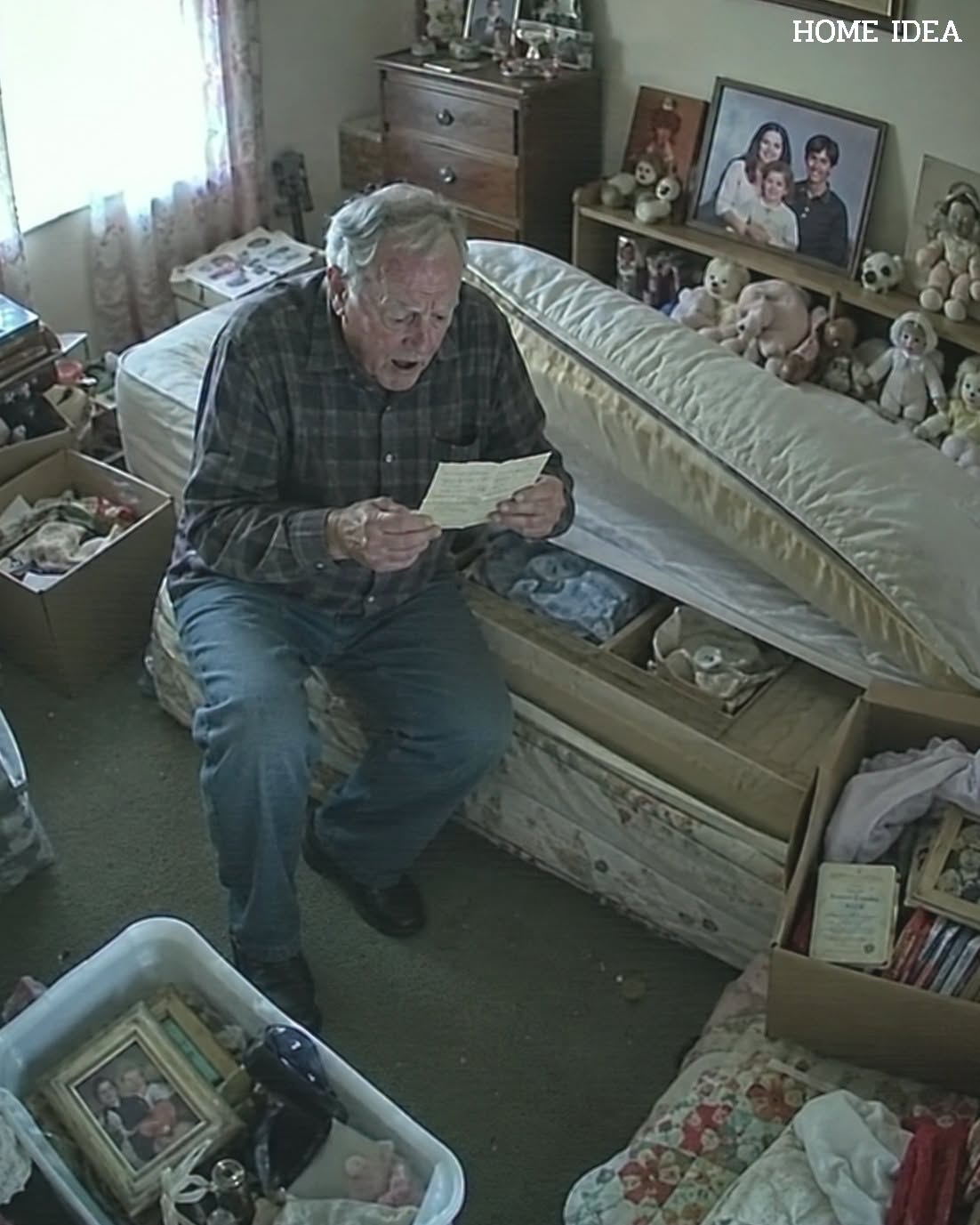
The bedspread had been replaced years ago, but the furniture was the same.
A faded childhood drawing still sat in the back of one drawer because I had never been able to throw it away.
When I showed her the mattress and the rough stitched opening where I had found the box, she covered her mouth with both hands.
Clara had hidden the letter there because she believed I would eventually search the children’s rooms if she failed to return.
Instead, grief had kept me out of them for forty years.
Miejsce, które Clara wybrała, bo myślała, że je znajdę, szybko stało się tym jedynym miejscem, którego nie mogłem sobie pozwolić na niespokojenie.
Tego wieczoru zadzwoniliśmy do Gwen ponownie.
Tym razem mój syn i córka siedzieli obok mnie.
Gwen odebrała po kilku sygnałach.
Mój syn odezwał się pierwszy.
Nie zapytał, dlaczego porzuciła go, gdy był dzieckiem.
Nie pytał, dlaczego Clara go wychowała.
Zapytał o sfałszowany list.
„Ty to napisałeś?”